A curated library on

human capital

DenominatorLibrary functions like a contemporary Library of Alexandria: a single destination for the most up‑to‑date social and human capital research. It transform complexity into clarity, allowing readers to explore, compare, and analyze research in an effortless way.

DenominatorLibrary

A single destination for the most-updated social and human capital research and insights.
City
Age
Race/Ethnicity
Gender

Summary

Companies don't have to choose between human rights and competitiveness. A five-year UNDP/WBA study of 235 global firms shows that improving human rights performance does not hurt profitability and is positively linked to asset efficiency. Academic work on US-listed firms (2002–2023) reinforces this, tying human rights practices to stronger ROA and market performance when paired with ESG. Governance design, especially sustainability committees and board diversity, drives credible due diligence. Yet ~80% of large companies still fail basic HRDD steps.
Human Rights
Occupational health and safety (OHS) is a key pillar of human capital management, directly influencing productivity, retention, and financial performance. Empirical studies show firms with strong safety cultures achieve higher ROI, lower compensation costs, and improved investor confidence. OHS investments enhance resilience, reduce operational risk, and align with evolving ESG expectations. Beyond compliance, prioritizing employee well-being signals leadership quality and sustainable value creation, making health and safety a financially material and strategic imperative for companies and their investors.
Health & Safety
Investor-led research consistently points to the same conclusion: structured human capital and well-being data are financially material. Analyses from investors such as J.P. Morgan, S&P Global, ISSB and AllianceBernstein all highlight that metrics like turnover, retention, diversity, and employee well-being are not only central to organizational performance but also directly linked to financial returns and risk management. Together, these findings position engagement, purpose, turnover, D&I, and mental health metrics as essential inputs for investor valuation and risk frameworks.
Human Capital
Research on broader definitions of diversity (beyond gender and race/ethnicity) remains limited, often with smaller samples and regional focus. Still, the available evidence points to a positive link between more holistically defined diversity and both team outcomes and company performance. The strength of this relationship, however, depends on additional organizational and team-level factors, suggesting that broader diversity is a performance driver but not in isolation.
Diversity
7 In today’s rapidly evolving technology landscape, particularly with the rise of AI, it’s worth asking whether a higher average age benefits or hinders company performance. Recent studies highlight a positive correlation between age diversity and stronger CSR performance across industries, suggesting that mixed-age teams bring valuable perspectives. However, much remains unexplored, including how these effects vary by sector and workforce demographics. There are still many unanswered questions.
City
Current evidence presents a complex picture: age diversity alone does not clearly enhance performance, innovation, or job satisfaction. However, in combination with inclusive HR policies, equitable workplace climate, strong leadership, and effective knowledge transfer, age-diverse teams demonstrate greater organizational identification, stronger trust, and enhanced resilience. These findings suggest that, under the right contextual conditions, age diversity can emerge as a powerful strategic asset. Future intervention-rich, multilevel research is needed to fully leverage its potential.
Age
Evidence on race in corporate leadership is mixed. Cross-sectional studies often link racially diverse boards to stronger performance, but causal analyses largely erase those gains, suggesting that representation alone is insufficient. Benefits seem to materialize when diversity is paired with proactive diversity-management strategies and substantive governance changes. At the same time, racial minority leaders themselves face lower compensation, higher dismissal risk, and narrower promotion paths, signaling persistent structural barriers.
Race/Ethnicity
While some studies have explored the link between gender diversity in leadership and financial performance, the picture is still emerging. Early findings suggest diverse boards may drive stronger results, but much of the research stops at correlation. To fully understand how gender diversity shapes business success, more in-depth studies are needed, turning promising signals into actionable insights for companies and investors alike.
Gender
Thank you! Your submission has been received!
Oops! Something went wrong while submitting the form.
2026
Human Capital
Company
Global HR and business leaders
9,000
Plus button - open description
2025
Human Rights
NGO
Global public firms
235
Plus button - open description
2025
Human Capital
Company
Global public firms
Plus button - open description
2026
Human Capital
Company
Global HR and business leaders
9,000
Plus button - open description
Research - Survey
Mixed-Methods
Close button to close abstract description

Abstract

Deloitte's 2026 survey of over 9,000 business and HR leaders across 89 countries reveals that organizations face three critical tipping points requiring immediate action. With 70% of leaders prioritizing speed and adaptability as their primary competitive strategy, success now depends on leveraging human advantage over technological differentiation alone. The research identifies that organizations taking human-centric approaches to AI are 1.6x more likely to exceed ROI expectations than those focusing solely on technology.

Denominator's comment

Strong human capital management today comes down to how fast an organization can adapt. Deloitte's finding that human-centric AI approaches deliver 1.6x higher ROI than technology-first strategies is a clear financial signal. For investors, the relevant workforce question has shifted from training volume to organizational agility: how quickly can a company reconfigure skills, culture and decision-making when markets move? That makes next-generation human capital disclosure financially material, and measurable.
Empirical research
Quantitative
Close button to close abstract description

Abstract

This paper examines the relationship between corporate human rights practices and firm market and financial performance, and the moderating role of Environmental, Social and Governance (ESG) practices. The authors use ordinary least squares regression as a baseline methodology on US-listed firms from 2002 to 2023, and generalized method of moments estimation to account for endogeneity concerns. The results indicate that firms' human rights practices are significantly associated with market performance and return on assets. ESG practices significantly moderate the relationship between human rights practices and firm performance, with the strongest effects observed for market-based performance measures. The findings reinforce the business case for integrating human rights into corporate ESG strategy rather than treating it as a stand-alone compliance topic.

Denominator's comment

2025
Human Rights
NGO
Global public firms
235
Plus button - open description
Empirical research
Quantitative
Close button to close abstract description

Abstract

This study, authored by UNDP and supported by the World Benchmarking Alliance, challenges the long-held belief that strong human rights performance comes at a cost to business competitiveness. Through a five-year quantitative analysis of 235 global firms, it provides compelling evidence that improving corporate human rights policies, processes and practices does not negatively impact financial performance. On the contrary, the report reveals a positive link between improved human rights records of companies and enhanced asset efficiency. It thereby reframes human rights due diligence as a strategic investment in resilience and long-term value. Key findings: • A Positive Link to Operational Efficiency: Significant positive relationship between improvements in a company’s human rights conduct and its subsequent asset efficiency (Return on Assets). This suggests that the operational benefits of stronger due diligence, such as more resilient supply chains and a more productive workforce, meet or exceed the initial costs over time. • A Neutral-to-Positive Market Reaction: A core tenet of the cost hypothesis is that investors will punish firms for “wasteful” social spending. Our panel regression models indicate this is false. We found that strong corporate human rights performance did not result in lower market valuations. In fact, the data shows a neutral-to-positive market reaction, with indicators such as Tobin’s Q displaying a positive (though not statistically significant) signal.

Denominator's comment

2025
Human Capital
Company
Global public firms
Plus button - open description
Case study
Mixed-Methods
Close button to close abstract description

Abstract

January 2025 Asset Management report reviews sector-level transmission pathways between human capital metrics (e.g. turnover, training, engagement) and financial outcomes. Using backtest analyses, the authors show that portfolios sorted on high human capital metrics delivered consistent excess returns and resilience even during volatility. The paper includes regional case examples (U.S./Europe/Asia), illustrating how structured disclosure frameworks improve ESG analysis and stewardship practices.

Denominator's comment

2025
Human Capital
Company
MSCI ACWI & Bloomberg High Yield
3,504
Plus button - open description
Case study
Qualitative
Close button to close abstract description

Abstract

Published in mid‑2023, this AllianceBernstein analysis argues that the 'Social' pillar—covering workforce diversity, labor standards, and human rights—is under-valued and under-examined in ESG frameworks. Through case study and portfolio-level synthesis, AB shows how social risks translate to financial risks, advocating for deeper data integration, investor engagement, and social metric analysis to unlock investment value.

Denominator's comment

2025
Diversity
NGO
Research review & UK asset managers
Plus button - open description
Literature review
Qualitative
Close button to close abstract description

Abstract

In this paper commissioned by the Diversity Project, Professor Alex Edmans (London Business School) examines cognitive diversity – the range of expertise, experiences, perspectives, and ways of thinking within a team. He argues that cognitive diversity can unleash significant value, but it is not enough on its own. Without psychological safety, employees generate different opinions but stay silent. Without inclusion, colleagues feel unfairly treated, which discourages interpersonal risk-taking. Cognitive diversity also brings real challenges: coordination becomes harder as colleagues "speak different languages," and the affinity that comes from shared backgrounds can fade. The scientific evidence linking cognitive diversity to performance is mixed. There is modest evidence that skills diversity has a generally positive relationship with performance, but the benefits vary by setting. Edmans argues that this does not make cognitive diversity irrelevant; rather, it shows it is difficult to manage, and organisations that manage it well stand to gain a significant competitive edge.The scientific evidence linking cognitive diversity to performance is mixed. There is modest evidence that skills diversity has a generally positive relationship with performance, but the benefits vary by setting. This does not make cognitive diversity irrelevant; rather, it shows that it is difficult to manage, and organisations that manage it well stand to gain a significant competitive edge.

Denominator's comment

Alex Edmans does not disclose the number of interview participants. The study focuses exclusively on UK-based asset owners and combines these insights with a broader review of cognitive diversity research. The research cited primarily draws on interviews with students or other participants, with sample sizes generally in the hundreds.
2025
Diversity
Academia
European public firms
405
Plus button - open description
Gender
Correlations
Quantitative
Close button to close abstract description

Abstract

This study examines the relationship between gender diversity and financial performance at different organizational levels including; Board of Directors (BoD), Executive Management Teams (EMT), Senior Management Teams (SMT), and Staff Levels (SL). It further examines if there is an optimal gender diversity ratio throughout organizations to increase financial performance with the starting point in the research by Ferrary & Déo (2023). The study builds on panel data including 405 observations over four years consisting of merged financial and gender diversity data. EBITDA Margin is used to measure financial performance. We conduct simple OLS regressions of each independent variable and then combine them in models. The results show that gender diversity has an overall positive impact on financial performance. However, we do not find one optimal ratio of gender diversity for all hierarchy levels in an organization. We find the optimal ratio of gender diversity to be 40-60% for BoD and EMT, and 30-70% for SL and SMT.

Denominator's comment

Empirical research
Quantitative
Close button to close abstract description

Abstract

This research examine whether and how the social (S) pillar of ESG can be financially material in portfolio construction. They compare three integration approaches over 2013–2021: traditional negative/positive screening, minimum-rating filters, and a quantitative full-integration model that incorporates the social pillar alongside risk–return objectives within a mean–variance optimization. Two main results stand out. First, negative screening, the most widely used ESG approach, does not in fact guarantee higher portfolio-level ESG scores than the market benchmark, because firms excluded for sin-industry reasons are not necessarily worse than included ones on social performance. Second, a quantitative integration model that balances social scores with risk and return produces both higher portfolio ESG scores and positive abnormal returns versus the benchmark, suggesting that the S pillar is alpha-relevant when treated as an optimization input rather than a binary filter. The authors argue that ESG portfolio practice should shift from screening-led to quantitative-led design.

Denominator's comment

This is one of the few papers that directly tests whether the social dimension can be alpha-generative at the portfolio level, rather than at the single-firm level. The 2013–2021 abnormal-return result, combined with the finding that screening alone does not deliver a more 'social' portfolio, is a strong argument for integration-based methods. Worth evaluating critically: the period overlaps with a structural inflow into ESG assets that mechanically lifted similar names; results depend on the ESG data provider chosen for the social pillar; and the 'social' bucket conflates human capital with broader social factors, so it is a proxy rather than a direct human-capital signal.
2025
Human Capital
Academia
Financial professionals (part of CFA)
512
Plus button - open description
Experimental study
Qualitative
Close button to close abstract description

Abstract

The study examines how professional investors assess firm risk when presented with human capital (HC) disclosures. Using an experimental design, it shows that disclosures focusing on employee development, training, and workforce stability lead investors to perceive firms as less risky compared to when such information is absent or limited. However, the effect depends on how disclosures are framed: more strategic, future-oriented HC information reduces perceived risk more than generic or compliance-driven reporting. The findings highlight that HC transparency shapes risk judgments and influences investment decision-making.

Denominator's comment

The study’s main strength lies in its experimental design, which isolates the causal impact of human capital disclosures on risk perceptions with high internal validity. Another advantage is the use of professional investors as participants, which enhances the realism of the findings compared to student samples.
2025
Human Capital
NGO
Global investor organizations
300
Plus button - open description
Research - Survey
Qualitative
Close button to close abstract description

Abstract

From June 2024 to January 2025, ISSB engaged over 300 professionals from 158 global investment organizations across diverse asset classes and geographies. Investors consistently emphasized interest on risks and opportunities related to working conditions and exploitation; health, safety and wellbeing; diversity and inclusion; pay and benefits; recruitment and retention; and workforce composition. The literature review supported these insights, highlighting investors’ demand for standardised, comparable human capital data and identifying disclosure gaps—especially on cross-sector comparability.

Denominator's comment

Empirical research
Quantitative
Close button to close abstract description

Abstract

This study surveyed manufacturing firms in the Macedonia–Thrace region of Northern Greece to assess how occupational health and safety (OHS) management practices influence corporate performance. By comparing businesses that adopt proactive OHS measures to those with passive or perfunctory approaches, it found that companies implementing structured safety frameworks experience higher productivity, better staff retention, and lower accident-related costs. The research highlights how effective OHS programs can bolster a company's resilience, competitiveness, and regulatory compliance. It also identifies enabling factors, such as leadership commitment, regulatory frameworks, and digital technologies, that support the adoption of OHS practices, offering evidence-based policy recommendations tailored to regional industry contexts.

Denominator's comment

2025
Diversity
Academia
US public firms
46,970
Plus button - open description
Gender
Empirical research
Quantitative
Close button to close abstract description

Abstract

This study investigates whether board gender diversity influences how firms invest in organization capital (OC), the intangible knowledge, processes, culture and routines embedded in an organization, and whether that channel translates into firm value. Using a panel of 46,970 firm-year observations from 5,430 US public firms (2000–2019), the authors find that firms with greater board gender diversity allocate more resources to organization capital. They further show that board gender diversity amplifies the positive effect of OC on firm value, suggesting that gender-diverse boards make existing OC more productive rather than only adding more of it. The results hold under instrumental-variable identification and propensity-score-matched difference-in-differences specifications designed to address endogeneity concerns. On average, women still represent only 9.7% of board seats in the sample, underscoring both the persistence of the diversity gap and the marginal value at stake when that share increases.

Denominator's comment

This is one of the more methodologically rigorous gender-diversity papers: large US panel, long horizon, and proper causal-identification tools (IV and PSM-DiD). What makes it worth evaluating is the mechanism, gender diversity is linked to investment in organization capital, which then drives firm value. That moves the conversation from "diverse boards correlate with returns" to a plausible value-creation channel investors can actually monitor. Caveats: it is US-only, board-level only (so it misses the wider leadership pipeline), and the 9.7% average female board share means the estimated effects come from relatively diversity-poor boards, not from balanced ones.
Race/Ethnicity
Literature review
Qualitative
Close button to close abstract description

Abstract

This integrative review synthesizes 147 articles published between 1990 and 2023 on racial minority strategic leaders, namely CEOs, top management team members, and board directors. The authors map the antecedents of racial minority representation in upper echelons across firm, board, individual, and environmental levels, and consolidate evidence on the consequences of such representation. At the firm level, racial minority strategic leaders have been associated with performance, innovation, CSR disclosure, and stock-market reactions, though findings remain mixed. The review places particular emphasis on outcomes for the leaders themselves: racial minority executives tend to receive lower compensation than their peers, face a higher likelihood of dismissal, and encounter narrower promotion pathways, even as some studies report stronger organizational commitment and identification. Career trajectories appear shaped not only by individual human-capital signals but also by board composition and broader societal context. The authors argue that the field is at a critical juncture, constrained by weak constructs and measurement, thin theoretical grounding, and limited generalizability across contexts, and propose a roadmap to strengthen methodology, theory, and contextual depth in future research.

Denominator's comment

Research on racial minority leaders in strategic roles is growing fast. This review of 147 studies shows their presence impacts firm performance and innovation, but also highlights big gaps, like weak theory, limited methods, and lack of contextual diversity, that future research must fix.
Literature review
Mixed-Methods
Close button to close abstract description

Abstract

This meta-analysis reviews 203 peer-reviewed studies (from 2019–2024), selected from an initial pool of over 800, to assess how board diversity affects corporate financial performance, excluding studies mixing in ESG or CSR factors. Diversity is broadly defined, including gender, education, race/ethnicity, nationality, culture, and age. Key findings: - About 73% of the studies find a positive relationship between board diversity and performance. Among those, roughly 57% report a direct positive effect (e.g. higher return on assets or equity), and 16% report indirect benefits, like improved governance, risk management or strategic decision-making. - Gender diversity is the most frequently studied facet (present in 85%+ of studies) and is often associated with better oversight, accountability, stakeholder alignment, and long-term corporate performance. - A minority of studies (≈16%) find no significant effect; a very small subset (≈5%) find negative associations, typically in contexts where diversity is more symbolic (tokenism), poorly integrated, or implemented without accompanying structural support. The review concludes that board diversity can have a meaningful financial upside, but benefits tend to materialize when diversity is substantive, supported by strong governance, and aligned with firm culture and strategy.

Denominator's comment

Gender
Empirical research
Quantitative
Close button to close abstract description

Abstract

This study aims to explore the relationship between gender diversity (GD) in leadership, green collaborations (GC) and firm financial success within FTSE 350 nonfinancial companies in the UK, shedding light on how GD moderates the impact of GC on firm financial success. The empirical analysis conducted in this study uncovers a compelling correlation between GD on the board and the financial success of firms involved in GC. The findings illuminate a positive association, indicating that companies boasting higher levels of GD among their leadership tend to outperform their counterparts with less diverse leadership teams regarding financial success (ROA, ROE and EPS). This suggests that including women in leadership roles can introduce fresh perspectives, innovative ideas and strategic priorities that prioritize sustainability and environmental stewardship by facilitating GC.

Denominator's comment

2025
Diversity
Company
Public US firms
4,100
Plus button - open description
Gender
Race/Ethnicity
Correlations
Mixed-Methods
Close button to close abstract description

Abstract

The "Not-So-White Paper" published by Elf Beauty, investigates the relationship between boardroom diversity and corporate performance among more than 4,100 publicly traded U.S. companies. Using a new proprietary database combining self-reported board composition data and public financial metrics, the study finds that boards with above-average gender and racial diversity exhibit stronger business outcomes, including 15% higher return on equity (ROE) and a 50% reduction in earnings risk. Boards with at least three members from underrepresented communities are most likely to realize these benefits. Despite the advantages, women and people of color remain underrepresented on boards, approximately three times more white people than people of color, and three times more men than women. The report concludes that increasing board diversity is not only a moral imperative but a business advantage, and calls for continued mixed-methods research and policy initiatives to double the rate of women and people of color joining corporate boards by 2027.

Denominator's comment

Correlations
Quantitative
Close button to close abstract description

Abstract

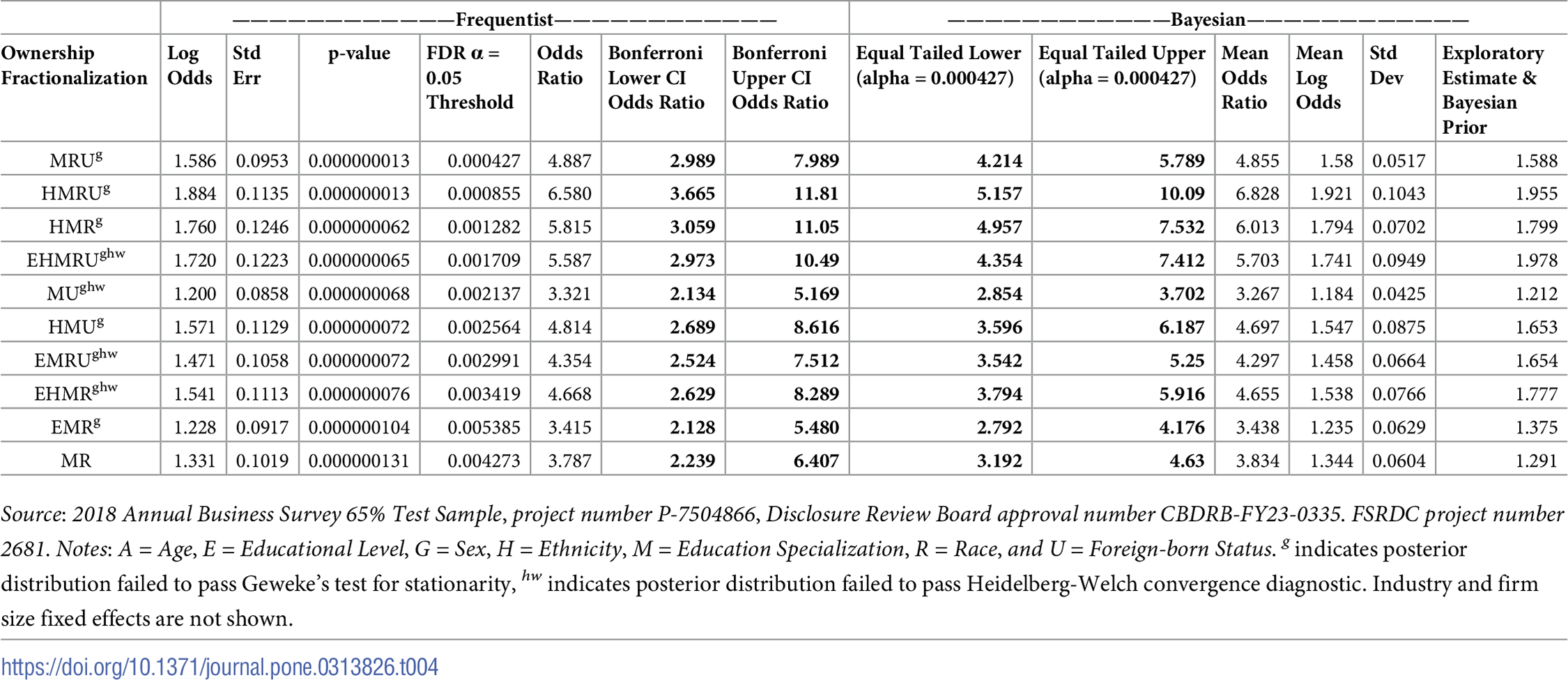
A split sample/dual method research protocol is demonstrated to increase transparency while reducing the probability of false discovery. We apply the protocol to examine whether diversity in ownership teams increases or decreases the likelihood of a firm reporting a novel innovation using data from the 2018 United States Census Bureau's Annual Business Survey. Transparency is increased in three ways: 1) all specification testing and identifying potentially productive models is done in an exploratory subsample that 2) preserves the validity of hypothesis test statistics from de novo estimation in the holdout confirmatory sample with 3) all findings publicly documented in an earlier registered report and in this journal publication. Bayesian estimation procedures that leverage information from the exploratory stage included in the confirmatory stage estimation replace traditional frequentist null hypothesis significance testing. In addition to increasing statistical power by using information from the full sample, Bayesian methods directly estimate a probability distribution for the magnitude of an effect, allowing much richer inference. Estimated magnitudes of diversity along academic discipline, race, ethnicity, and foreign-born status dimensions are positively associated with innovation. A maximally diverse ownership team on these dimensions would be roughly six times more likely to report new-to-market innovation than a homophilic team.

Denominator's comment

Table 4 shows that the diversity measures with the strongest and most reliable effects mainly involve Education Specialization, Foreign-born Status, Race, and Ethnicity. Table 5, by contrast, shows that the measures based on Sex and Age tend to have weaker and less precisely estimated effects. The strong association between diversity in terms of race, ethnicity, foreign-born status, and education specialization raises important policy questions regarding immigration and affirmative action policy. However, a critical limitation of this analysis is that causation has not been established.
2025
Human Capital
Company
Global
Plus button - open description
Literature review
Mixed-Methods
Close button to close abstract description

Abstract

ERM positions human capital as a central theme in corporate sustainability and risk management for 2025. The report argues that effective human capital management requires going beyond dashboards, integrating workforce health, labor practices, diversity, and human‑rights considerations into corporate strategy. It highlights that human capital is no longer a side‑issue but a material factor influencing long‑term resilience, especially under evolving ESG and regulatory pressures.

Denominator's comment

Observational research
Quantitative
Close button to close abstract description

Abstract

This study explores how various indicators of workplace financial performance, such as interest income, value-added per person, and depreciation—relate to the incidence of occupational injuries and diseases, using data from South Korean workplaces surveyed in the Workplace Panel Survey. The analysis reveals that poorer financial health is linked to higher risks of injury or disease, while stronger indicators like depreciation, amortization, and industrial property rights correlate with lower incidence. Interestingly, larger workforces were associated with more injury cases, but a lower overall probability of injuries per worker. The findings suggest that robust financial management and tangible asset investment can play a protective role in occupational safety.

Denominator's comment

These results offer compelling evidence for firms and policymakers to strengthen workplace safety by reinforcing financial stability and capabilities.
2025
Diversity
Academia
Poland, private firms
30
Plus button - open description
Age
Research - Survey
Quantitative
Close button to close abstract description

Abstract

The aim of this study was to determine the role of employee age heterogeneity in building a sense of belonging to the organization and to recognize the impact of human resource management activities and an inclusive climate on this relationship. While age diversity alone was not directly related to organizational identification, HR activities supportive of all age groups and a welcoming organizational environment significantly mediated this relationship. The findings highlight the importance of applying human resource policies inclusive of different age groups and cultivating a welcoming organizational environment to enhance organizational identification. Future research should further explore the mechanisms and contexts in which age diversity impacts organizational identification, considering industry and cultural differences

Denominator's comment

This research stands out as one of the rare empirical examinations of how employee age heterogeneity relates to organizational identification. While the Poland-focused sample may limit generalizability to other cultural or industry settings, the study nevertheless provides valuable early insights into how age diversity interacts with HR practices and workplace climate to influence identification. These findings offer a promising foundation to guide and inspire expanded, cross-national research efforts in the field.
Age
Research - Survey
Qualitative
Close button to close abstract description

Abstract

This study explores the influence of age diversity within teams on civil servants’ perceptions of organizational change. Age diversity is examined through two dimensions: age variety, which refers to the range of different ages within a team, and age polarization, which denotes the extent to which age groups are segregated or clustered within a team. Individual perceptions of change are based on how civil servants evaluated a recent merger. While age polarization shows a significant effect—with less polarized teams exhibiting more positive perceptions of the merger—age variety does not demonstrate a notable impact. These results highlight that while age diversity is important, its impact is nuanced: simply having a range of ages is not sufficient, but reducing age polarization is crucial.

Denominator's comment

Correlations
Quantitative
Close button to close abstract description

Abstract

We investigate the impact of diversity and inclusion (D&I) on firm performance for the period 2017–2021. While the existing literature examines the relationship between diversity and firm performance, little is known about the combined effects of D&I on firm performance. This study aims to utilize the most widely used data source, the Global Diversity and Inclusion (D&I) Index, provided by the LSEG workspace. Using 8089 firm-year observations from a sample of globally listed firms and an OLS regression model, we find that firms with a higher D&I score have better firm performance, as measured by Tobin’s Q. Our moderating analysis shows that the impact of D&I on firm performance is more pronounced for firms with higher institutional ownership. We also split institutional ownership into domestic and foreign institutional ownership and show that the influence of D&I on firm performance differs between domestic and foreign institutional ownership. Our result is robust when we use an alternative proxy for firm performance and consider the findings without US firms in the sample. The overall findings indicate that considering a diverse and inclusive workforce is worthwhile for key stakeholders when making policy decision

Denominator's comment

2024
Human Rights
Academia
Global listed firms in high-risk sectors
509
Plus button - open description
Empirical research
Quantitative
Close button to close abstract description

Abstract

The study aims to investigate the role of corporate governance in driving effective human rights due diligence (HRDD) practises. The study tests the impact of corporate governance mechanisms on HRDD on an international sample of 509 listed companies operating in high-risk sectors included in the Corporate Human Rights Benchmark. Our findings show the positive effect of corporate governance on HRDD, suggesting that committed corporate governance, especially sustainability committee and board diversity, improves the effectiveness of HRDD carried out by companies. Our study contributes to the literature by providing insights into enhancement-based drivers of corporate governance, which positively impact HRDD. This research also has practical implications for companies because it can help them enhance their HRDD by establishing a sustainability committee or supporting gender diversity within the board. This research addresses social and policy implications considering the European directive on corporate sustainability due diligence directive (CSDDD), which mandates HRDD for large EU and non-EU companies.

Denominator's comment

Useful complement to the UNDP/WBA work: where UNDP shows that better human rights performance does not harm financial outcomes, Torelli et al. show what kind of governance actually produces better human rights performance, namely a sustainability committee and a more diverse board. Together, these two studies start to articulate a causal chain from governance design to HRDD quality to firm outcomes.
2024
Human Capital
Company
Global, CSA firms
2,731
Plus button - open description
Correlations
Mixed-Methods
Close button to close abstract description

Abstract

Based on S&P Global’s 2024 CSA data from roughly 2,700 companies worldwide, fewer than 3 % of organizations include structured survey metrics on employee well-being, such as stress, happiness, or life purpose. Companies that do measure these aspects report markedly lower voluntary turnover, higher engagement scores, and stronger innovation performance. Considering the immense costs of replacing staff, especially managers, for whom replacement can cost up to twice their annual salary, these findings underscore the clear financial incentive for integrating well-being metrics into employee assessments.

Denominator's comment

The research draws on robust, real-world data encompassing over 2,700 companies, lending its findings considerable credibility and relevance across industries. While the correlational nature of the analysis means causation cannot be definitively established, the strength of these associations firmly supports the case for making employee well-being a strategic priority.
2024
Diversity
Company
Public firms in North America, Europe and Asia-Pacific
3,100
Plus button - open description
Gender
Correlations
Quantitative
Close button to close abstract description

Abstract

A Moody’s Ratings report, using Denominator data on 3,100 rated companies, explores the link between board gender diversity and credit quality in advanced economies. Findings show investment-grade companies have more women on boards, averaging 29%. Across Europe and North America, board gender diversity has modestly improved, with service and consumer sectors—such as insurance, retail, healthcare, pharmaceuticals, utilities, and consumer products—showing the highest representation. Companies with positive governance issuer profile scores (G-1) increased women’s board representation from 31% to 34%. Additionally, North American investment-grade companies exhibit greater racial and ethnic diversity on boards, highlighting a broader trend toward diversity in higher-rated firms.

Denominator's comment

2024
Human Capital
Company
Global
3,300,000
Plus button - open description
Case study
Mixed-Methods
Close button to close abstract description

Abstract

The Q12 consists of 12 scientifically validated survey items that measure four levels of employee needs (basic needs, individual contribution, teamwork, and growth) and have been repeatedly linked to team and business performance. Comparing top-quartile to bottom-quartile teams on engagement, Gallup reports highly engaged teams achieve, on median: 23% higher profitability; 14% higher productivity in production records and evaluations and 18% higher productivity in sales; 10% higher customer loyalty/engagement; 70% higher employee wellbeing; and 22% higher organizational citizenship. They also experience 78% less absenteeism, 21% less turnover in high-turnover organizations and 51% less in low-turnover organizations, 28% less shrinkage, 63% fewer safety incidents, and 32% fewer quality defects. The Q12+ adds four further items on respect, wellbeing, meaningful feedback and brand integrity. The page positions the Q12 as both a diagnostic instrument and a management tool that connects engagement to measurable business outcomes. This is a Gallup, Inc. resource page, consolidating findings from Gallup's ongoing employee engagement meta-analysis covering more than 3.3 million workers across over 100,000 teams.

Denominator's comment

This is Gallup content collateral rather than an independent study, but the underlying Q12 meta-analysis is a uniquely large and frequently cited evidence base linking employee engagement to financial and operational performance. The most material numbers for investors are the productivity, profitability and turnover differentials between top- and bottom-quartile engaged teams, which translate engagement from a soft HR metric into a quantifiable driver of unit economics. The framework is also useful as a structured set of human capital questions that investors and management teams can ask consistently across companies.
2024
Human Rights
NGO
Global companies in high-risk sectors
2,000
Plus button - open description
Empirical research
Quantitative
Close button to close abstract description

Abstract

Drawing on the World Benchmarking Alliance's Corporate Human Rights Benchmark (CHRB), this analysis assesses around 2,000 companies operating in high-risk sectors against the core human rights due diligence (HRDD) steps drawn from the UN Guiding Principles on Business and Human Rights. The headline finding is stark: roughly 80% of assessed companies score zero on the initial steps of HRDD, namely identifying, assessing and taking action on their human rights risks and impacts. The findings highlight that elevating human rights responsibilities to the board and senior management level, alongside binding regulation, guidance and stakeholder pressure, is associated with stronger HRDD performance. The CHRB concludes that voluntary action alone has not been sufficient to drive systemic improvement, and calls for regulatory and capital-market mechanisms to accelerate adoption.

Denominator's comment

Race/Ethnicity
Empirical research
Quantitative
Close button to close abstract description

Abstract

The authors examine whether increasing racial-ethnic diversity on corporate boards leads to improved firm performance, valuation or reduced risk. Their sample covers over 2,400 publicly traded U.S. firms, leveraging two external "shocks", the passage of race-diversity mandates (e.g., California's law requiring minority board representation) and the social pressure surge associated with the Black Lives Matter wave. Initial cross-sectional analyses show a positive correlation: firms with more racially diverse boards tend to have higher sales, returns on assets, market valuations (Tobin's Q) and lower idiosyncratic volatility, consistent with common "business case for diversity" narratives. However, once the authors use longitudinal causal methods (a "triple-difference" model and event-study around the mandates/social-pressure events), the strong correlations largely disappear. Forced increases in board racial diversity did not lead to statistically significant improvements in firm profitability, value, or overall risk. Modest diversity increases had a small association with reduced firm risk, but not improved performance or valuation. The authors suggest that the newly added directors often had similar credentials as existing ones; as a result, adding racial diversity alone may not change firm governance, decision-making or outcomes. Their conclusion: while racial diversity on boards poses little downside, it does not automatically deliver financial upside. Realizing benefits likely requires deeper structural changes (in governance, inclusion, board practices), not just demographic representation.

Denominator's comment

Empirical research
Quantitative
Close button to close abstract description

Abstract

Drawing on self-determination theory, this study examines whether employee engagement promotes innovative work behavior (IWB) in Pakistan's manufacturing sector, and tests two mechanisms: the mediating role of employee voice behavior and the moderating role of perceived distributive fairness. The authors collect survey data from 180 employees and analyze the relationships using partial least squares structural equation modelling (PLS-SEM). Results show that engaged employees are significantly more likely to display innovative work behavior, and that employee voice fully mediates the engagement–innovation relationship: engagement translates into innovation when employees feel safe and encouraged to raise ideas, suggestions and concerns. By contrast, perceived distributive fairness does not significantly moderate the engagement–innovation link, suggesting that voice mechanisms matter more than pay-equity perceptions for converting engagement into innovative behavior in this context. The paper concludes with managerial implications for HR leaders in manufacturing on how to design feedback channels and engagement initiatives that unlock innovation.

Denominator's comment

A useful complement to broader engagement evidence (e.g., Gallup Q12): rather than just confirming that engagement correlates with performance, this study isolates a mechanism, employee voice, that turns engagement into innovation. The null finding on distributive fairness is also informative: in this sample, fair pay alone does not amplify the engagement–innovation link, which pushes the practical lever back toward listening and feedback infrastructure. Caveats: single-country, single-sector and modest sample size (n = 180), so the magnitudes should not be over-generalized to other geographies or industries.
Empirical research
Quantitative
Close button to close abstract description

Abstract

The disclosure of work safety information of listed companies in high-risk industries is an important aspect of their social responsibility, and it is also an inevitable requirement to meet the right of stakeholders to know, which has a far-reaching impact on the development of enterprises. In order to clarify the impact mechanism of work safety information disclosure on enterprise performance of listed companies in high-risk industries. 222 listed companies in high-risk industries were taken as the research object, and the multiple regression analysis method was used to analyze the relationship between the level of work safety information disclosure of enterprises and their financial performance, safety performance and social reputation. The results show that the work safety information disclosure of listed companies in high-risk industries has a positive impact on corporate financial performance, safety performance and social reputation; unabsorbed slack resources have a positive U-shaped regulatory effect on work safety information disclosure and enterprise social reputation; The shareholding ratio of institutional investors has an inverted U-shaped regulatory effect on the positive relationship between work safety information disclosure and enterprise social reputation. This study has enriched the theoretical and practical exploration of research on work safety information disclosure. It can help improve the level of work safety information disclosure and safety management in enterprises, while guiding the sustainable development of occupational health and safety within these organizations.

Denominator's comment

2023
Diversity
Academia
Asia (Russia, India, China)
240
Plus button - open description
Correlations
Quantitative
Close button to close abstract description

Abstract

This study investigates the impact of boardroom diversity (BD) on firms’ financial performance (FP), drawing on economic and resource dependency theory. The study further explores the influence of strategic change (SC) on this nexus, using a six-dimensional index to measurse BD and SC. A dataset of 240 non-financial firms listed on four stock exchanges (Moscow, Shanghai, Bombay, and Pakistan) over a 13-year period (2008–2020) is analyzed employing the generalized method of moments to address the common endogeneity problem in econometrics specification. The empirical results indicate that BD has a positive impact on FP, however, the impact is weakened by SC. The robustness of the findings is confirmed through alternative estimators. The study provides useful policy implications for managers and practitioners, suggesting that increasing BD can lead to improved FP, but careful consideration must be given to how SC may influence this connection

Denominator's comment

The study benefits from strong historical data and a rigorous methodological design, offering credible evidence of a board diversity–performance link. Yet, its focus on emerging-market firms means governance norms, diversity mandates, and institutional frameworks may differ substantially from the West. The diversity dimensions used may overlook Western-specific factors like racial quotas or equity mandates. Despite these caveats, the findings are intriguing and warrant complementary research in Western settings to assess their broader applicability.
2023
Health & Safety
Academia
Canada, manufacturing and construction firms
433
Plus button - open description
Case study
Qualitative
Close button to close abstract description

Abstract

The study sought to quantify the financial returns attributable to OHS expenditures by applying a rigorous, multi-stage approach. Researchers estimated direct and indirect costs averted due to prevented injuries and added equal value for intangible benefits like improved morale, production quality, and reputation. They found that, on average, every dollar spent returned $1.24 in manufacturing, $2.14 in transportation, and $1.34 in construction. Although ROI varied, about 32% of firms had returns under 1.0 and 68% exceeded it, most employers realized positive gains.

Denominator's comment

2023
Diversity
Academia
Public US firms
174
Plus button - open description
Gender
Correlations
Quantitative
Close button to close abstract description

Abstract

This research examines how diversity relates to firm performance in two contrasting sectors: people-dependent Professional Services and product-dependent Energy Services. Motivated by observed gender diversity inequalities, the study uses regression analysis to test relationships between diversity metrics—such as women’s representation in board and executive roles—and financial performance indicators like Return-on-Assets and Return-on-Sales. The findings reject the hypothesis of a positive diversity–performance relationship in Professional Services and the hypothesis of no relationship in Energy Services. Insights from Management Studies and Organisational Behaviour helped identify the drivers and barriers behind these patterns, leading to sector-specific implications. The study concludes that Professional Services, with fewer capital and physical asset dependencies, shows limited benefits from gender diversity, while Energy Services, with high capital requirements, similarly gains little from diversity efforts. Nevertheless, the analysis suggests that Professional Services firms are better positioned to harness diversity for short-term growth and long-term sustainability compared to Energy Services firms.

Denominator's comment

2023
Diversity
Academia
Public firms in Indonesia
467
Plus button - open description
Gender
Empirical research
Quantitative
Close button to close abstract description

Abstract

Abbas and Frihatni examine whether gender diversity in Indonesian corporate governance structures affects the likelihood of firms suffering financial distress. The study uses a quantitative cross-sectional design on 467 Indonesian public firms, applying descriptive statistics and logistic regression to test how the presence of women on the commissioner board, director board and audit committee maps to financial distress outcomes. Descriptively, the authors find very limited female representation: women appear in the structure of corporate governance in roughly 13% of firms on the commissioner board, 7% on the director board and 5% on the audit committee. The regression results show that firms with gender diversity on the commissioner board tend to suffer financial distress at lower rates than firms that employ only men, while the effects through the director board and audit committee are less consistent. The authors frame the findings in social-identity theory and discuss policy implications for raising the participation of women in Indonesian boardrooms.

Denominator's comment

Useful as an emerging-market complement to the US- and Europe-heavy gender-diversity literature, and the shift in outcome variable (financial distress, a downside-risk measure) is more relevant to investor risk frameworks than the standard ROA / ROE story. The strongest contribution is on the commissioner board, which fits Indonesia's two-tier governance model. Critical caveats: the sample is small (n = 467), cross-sectional and logistic-regression-based, so causality should not be inferred; female representation is very low (5–13%), meaning estimates are pulled from the lower tail of the distribution; and the two-tier governance setup limits direct read-across to US/UK single-board firms.
2022
Diversity
Academia
S&P500
10,464
Plus button - open description
Gender
Correlations
Quantitative
Close button to close abstract description

Abstract

With growing focus on corporate sustainability and social impact, many companies have introduced measures to improve diversity and responsibility. However, questions remain about whether these efforts reflect genuine change or simply impression management. This paper examines corporate board diversity and whether rising minority representation may involve “diversity washing.” We studied S&P500 boards, analyzing whether minority individuals hold multiple board seats disproportionately—a phenomenon we call “recycling.” Results show some minority groups, especially those of African ethnicity, are appointed to multiple boards significantly more than average, while Asian ethnicities are less affected. Comparing board diversity to top management, we found boards were more diverse, but ethnic minorities remain underrepresented overall, with representation far below the “critical mass” threshold of three seats. Women also often fail to reach this threshold on boards. Although our findings reveal recycling and underrepresentation patterns, limitations arise from not being able to determine companies’ true intentions. The lack of prior research on recycling and diversity washing further constrains interpretation.

Denominator's comment

Age
Literature review
Quantitative
Close button to close abstract description

Abstract

The current research is a systematic review of 54 empirical papers from 1996 to 2022 which aim to investigate whether board member age diversity influences a firm’s financial and non-financial outcomes. Analysis of the extant research reveals board member age diversity to be an inconsistent predictor of both the financial and non-financial performance of a firm. Apart from CSR performance, which was found to more consistently be positively associated with age diversity, most studies included in the review failed to identify age diversity as a significant predictor of firm outcomes, however several positive, negative and curvilinear relationships were found by some studies. The lack of a consistent trend of significant associations may indicate that age diverse boards perform no better or worse than non-diverse boards or, more likely, given the inconsistent pattern of results, this research highlights that there may be other factors, such as team processes or task characteristics, which differentially impact whether age diversity has a positive, negative, curvilinear or no effect on outcomes. The current work is the first to systematically evaluate the available data on board age diversity and provides a clear account of what is known and what is not known about the relationship between board member age diversity and financial and non-financial outcomes. This study offers important insights and practical recommendations to researchers, HRM practitioners and policy makers interested in understanding how board composition factors influence the performance of corporate boards.

Denominator's comment

Backtested factor analysis
Quantitative
Close button to close abstract description

Abstract

Focusing on intrinsic human capital drivers, like purpose, appreciation, relationships, and psychological safety, firms build Good Will and Utility Alignment, motivating employees to perform at their best. This intrinsic focus, rather than extrinsic incentives, has proven predictive of financial outperformance via the Human Capital Factor (HCF). J.P. Morgan’s independent validation reports that portfolios with high HCF scores have delivered ~4% annual alpha, with lower risk, higher Sharpe ratios, and reduced drawdowns. This materiality supports integration of employee sentiment metrics into investment strategy.

Denominator's comment

The study’s strength lies in its robust dataset, spanning approximately 1,300 U.S. publicly traded companies, supported by 2.6 million survey responses and nearly 71 million data points over 2009–2024—lending both scale and credibility to its findings. It offers compelling, quantifiable alpha results (~4% annual excess returns recognized internationally), reinforcing the relevance of human capital measurement in investment analysis. While its focus on a U.S.-based universe, the strong, quantifiable alpha performance achieved in this context makes the results relevant and persuasive on a global stage
2021
Health & Safety
Academia
Health Advantage Appreciation Fund (HAAF)
Plus button - open description
Empirical research
Quantitative
Close button to close abstract description

Abstract

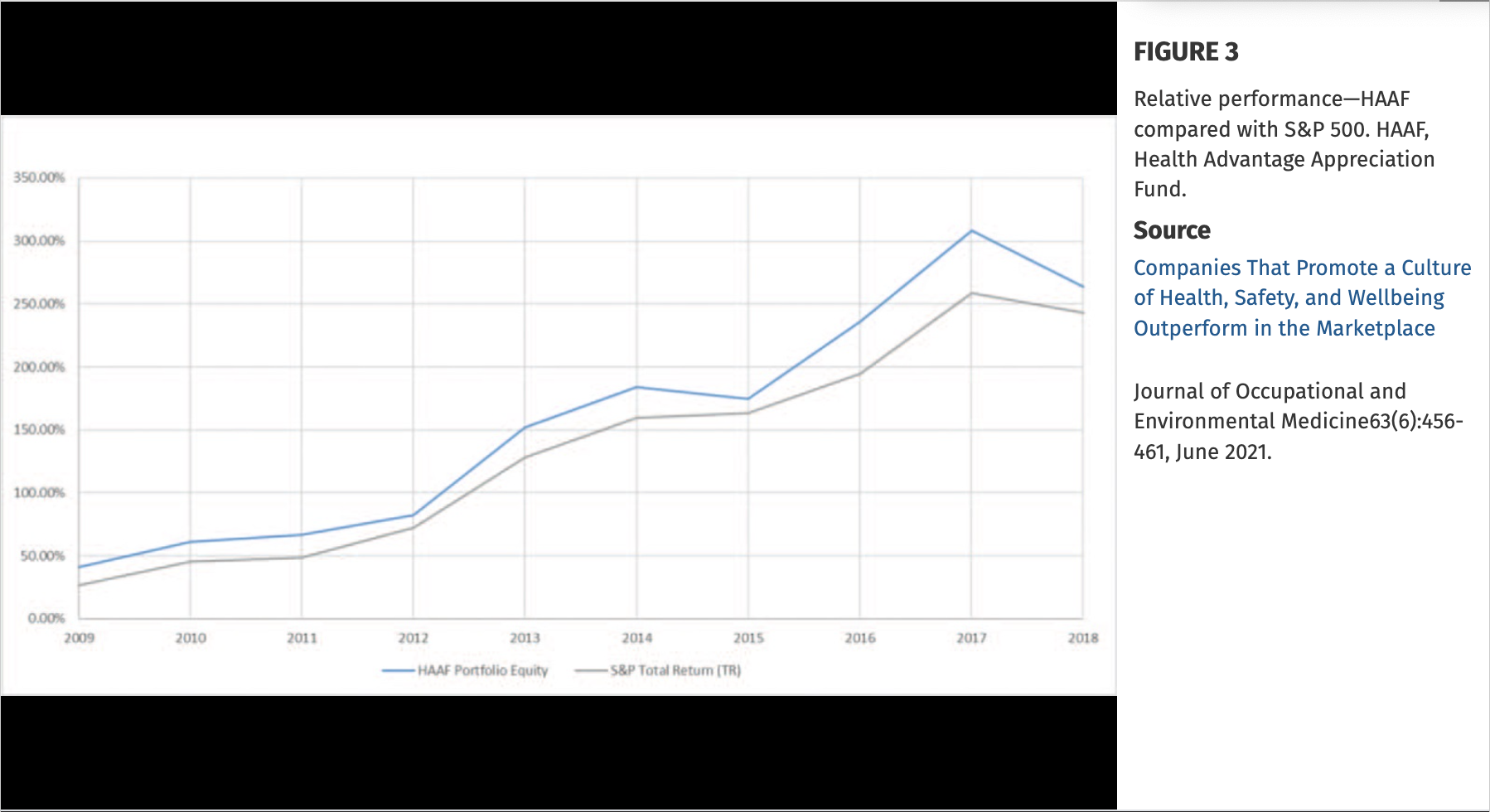
This study investigated whether companies distinguished by their strong commitment to employee health, safety, and well-being outperform the broader market. They evaluated a fund composed of publicly traded companies selected for exemplary workplace health practices—such as having a dedicated health officer, on-site wellness programs, or recognized health and safety awards—and tracked its performance over ten years. The fund achieved a cumulative time-weighted return on equity of 264 %, surpassing the S&P 500’s 243 %, translating to an approximate 2 % per annum outperformance. These results highlight that fostering a robust culture of health and safety not only supports workforce well-being but also appears to confer tangible financial advantages, suggesting that investors and employers alike would benefit from incorporating such considerations into their evaluation strategies.

Denominator's comment

2021
Diversity
Academia
Indonesian banks
Plus button - open description
Age
Case study
Quantitative
Close button to close abstract description

Abstract

The findings of this study indicate that the existence of age diversity in top management team (TMT) will aid bank governance if it is accompanied by effective meetings among groups of directors of varying ages. This age composition of directors will make meetings more effective as rich information for strategic decisions will be generated from different points of view because of the wide spectrum of age categories, and hence, there will be a positive impact on bank performance. Social implications: This study indicates that effective meetings of TMT groups of different ages will minimize the rise of "self-esteem". Therefore, they will benefit the creation of a better quality relationship among TMT individuals. Accordingly, TMT within a company will have more opportunities to discuss in providing bright ideas for the company on how to innovate and create a new strategy to improve its performance. Originality/value: This study, being the first to explore the effectiveness of TMT meetings to bank performance in the contexts of directors' age diversity, contributes to the literature in this area, and especially to the body of knowledge about companies implementing a two-tier governance system.

Denominator's comment

2020
Diversity
Company
Large firms across 15 countries
>1,000
Plus button - open description
Gender
Correlations
Quantitative
Close button to close abstract description

Abstract

Diversity Wins is the third McKinsey report on the business case for diversity, following Why Diversity Matters (2015) and Delivering through Diversity (2018). Using data from 15 countries and over 1,000 companies, it finds an even stronger link between diversity on executive teams and financial outperformance than in previous years. The study shows companies in the top quartile for gender diversity were 25% more likely to achieve above-average profitability than those in the bottom quartile—up from 21% in 2017 and 15% in 2014. Firms with over 30% women executives outperform those with 10–30%, who in turn outperform those with few or none, creating a 48% performance gap between the most and least diverse companies. However, progress is uneven. While some companies are achieving impressive diversity gains through business-led, systematic approaches focusing on inclusion, many have stalled or regressed. McKinsey stresses that inclusion—not just representation—is essential for lasting change and urges companies to take bolder action to build inclusive cultures that drive both diversity and performance.

Denominator's comment

Literature review
Mixed-Methods
Close button to close abstract description

Abstract

Commissioned by UNDP and the International Corporate Accountability Roundtable (ICAR), this report consolidates the evidence base for the economic case for corporate respect for human rights. The authors undertake a global multidisciplinary desk review covering research reports, laws and regulations, court cases, media reports and academic articles across law, economics, management and political science. The report concludes that corporate human rights abuse has measurable and growing economic costs, and that the business and human rights debate underweights how human rights risks affect companies' economic position and long-term development.

Denominator's comment

2016
Diversity
Academia
Global, across sectors
74
Plus button - open description
Age
Literature review
Quantitative
Close button to close abstract description

Abstract

This article presents a meta-analysis of 74 empirical studies on the relationship between age diversity (AD) and key team outcomes, including performance quality, financial results, innovation/creativity, team effectiveness, satisfaction, and turnover. Contextual moderators (task complexity, performance evaluation type, study setting, team size, age cohort) are also analyzed. Results show no significant overall associations between age diversity and most team outcomes, except for turnover (r = 0.11, p < .05). Moderator analyses reveal weak but significant differences across task complexity, team size, and age cohort. The study contributes by challenging assumptions about the positive impact of age diversity and highlighting key contextual boundary conditions

Denominator's comment

Although this meta-analysis was published in 2016, its comprehensive integration of 74 empirical studies, revealing nuanced relationships between age diversity and team outcomes, demonstrates enduring relevance and robustness. Its use of strong quantitative methodology and contextual moderating factors makes it a foundational reference. However, given that workplace dynamics and diversity contexts have evolved, updating this meta-analysis now would be a valuable research opportunity, offering potential to re-evaluate and deepen our understanding using more recent data and emerging moderating variables.
Literature review
Mixed-Methods
Close button to close abstract description

Abstract

The paper reviews 92 empirical studies examining links between HR policies (especially training and broader human capital management practices) and standard financial performance metrics (e.g. ROE, ROI, profit margins, Tobin's Q). The majority of reviewed studies find positive correlations between robust human capital practices and improved financial outcomes. The authors conclude that human capital is sufficiently material to financial performance to merit inclusion in investment analysis — while noting data availability, comparability and standardization remain key challenges.

Denominator's comment

Race/Ethnicity
Case study
Quantitative
Close button to close abstract description

Abstract

The purpose of this study was to examine the degree to which a proactive diversity-management strategy moderated the relationship between racial diversity and organizational performance. Data were gathered from 75 NCAA (National Collegiate Athletic Association) athletic departments. Hierarchal regression analysis indicated that, after controlling for the department expenditures and department size, racial diversity was positively associated with objective measures of overall performance. These effects were qualified by the moderating effects of a proactive diversity-management strategy, as departments that were racially diverse and followed a proactive diversity-management strategy had the greatest performance. The total model explained 68% of the variance in the department's performance. Results are discussed in terms of contributions and implications.

Denominator's comment

Cunningham's study offers a useful early demonstration that racial diversity correlates with stronger organizational performance, and that the effect is amplified when paired with a proactive diversity-management strategy. The main caveat is the setting: 75 NCAA athletic departments are organizationally simpler than most corporate firms, with narrower performance metrics, smaller teams, and a labor market shaped by sport-specific dynamics. Generalising the moderation effect to multinational corporations therefore requires caution. That said, the underlying argument, that diversity needs active management to translate into performance, has aged well, and the 2009 findings remain a frequently cited reference point in the diversity-performance debate.